
Our safety work gloves are designed to protect a worker’s hands from different hazards. Safety work gloves may protect against chemical exposure, abrasions, cuts, burns, electrical risks, punctures, and other various dangers and risks on the job. We have provided three main categories of work gloves.
Categories of Our Work Gloves
- NR LATEX (base) COATED GLOVES
- NBR (Nitrile base) Coated Gloves
- Coated Gloves Based on Advanced Yarns
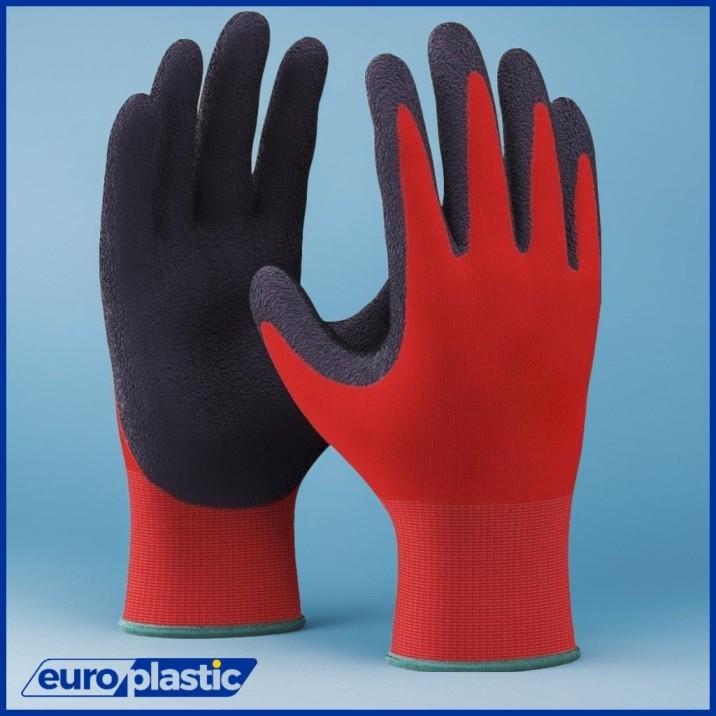
NR LATEX (base) COATED GLOVES
Natural Latex (NR Latex): is a processed leachate of the Hevea tree (rubber tree) that can be grown in tropical forests such as Southeast Asia, South America, South Africa. Natural rubber is superior to synthetic rubber due to its high tensile strength and vibration damping properties. Their other properties are good electrical insulation, resistance to most mineral acids, salts and alkalis. But natural latexes have little resistance to petroleum solvents such as oil, gasoline, naphtha, etc. and they lose their strength at temperatures of more than 80 °C, and if special chemical material are not used in their compounds, they will quickly deteriorate when exposed to direct sunlight. The above set of features makes the use of natural latex suitable in the production of gloves for general use and gloves in the group of mechanical hazards, especially cut resistance.
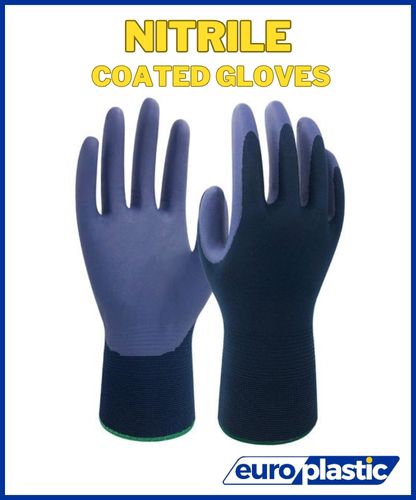
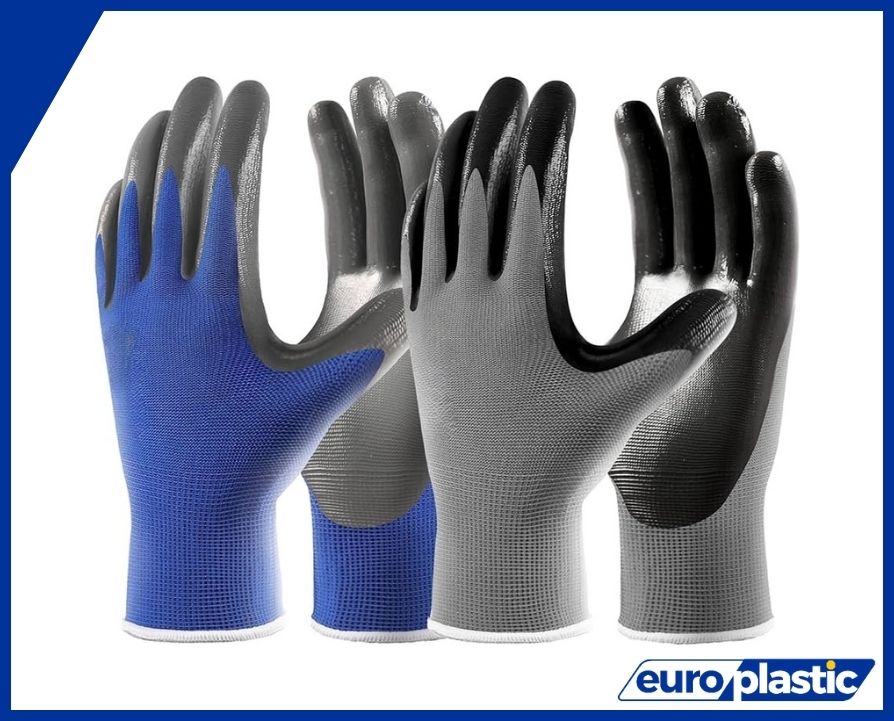
NBR (Nitrile base) Coated Gloves
Nitrile rubber, also known as nitrile butadiene rubber, is a synthetic rubber derived from acrylonitrile (ACN) and butadiene. NBR’s stability at high temperatures from −40 to 108 °C (−40 to 226 °F) makes it an ideal material for aeronautical applications. Its resilience makes NBR a useful material for disposable lab, cleaning, and examination gloves. Nitrile rubber is more resistant than natural rubber to oils and acids, and has superior strength, but has inferior flexibility and tensile strength. Nitrile gloves are more puncture resistant than natural rubber gloves. Nitrile rubber is less likely to cause an allergic reaction than natural rubber.
Coated Gloves Based on Advanced Yarns
To achieve a shear strength of level 5 and above, in the production of gloves, high-strength synthetic yarns such as para-aramid (Kevlar) and high-performance polyethylene (HPPE) and composite fibers with steel fibers are being used.
Kevlar fibers are composed of long chains of Polyparaffinol Terephthalamide, which makes the inter-chain-bonds of this material very strong. Kevlar fibers have a high strength to weight ratio and their strength is 5 times more than steel. Kevlar maintains its strength and flexibility up to -196 ° C. In fact, it is slightly stronger at low temperatures. At temperatures above 160 ° C, the tensile immediately strength decreases by about 10-20% and after a few hours the strength gradually decreases.
Ultra-high-molecular-weight polyethylene (UHMWPE, UHMW) with trade name HPPE is a subset of the thermoplastic polyethylene that has extremely long chains, with a high molecular mass. This results in a very tough material, with the highest impact strength of any thermoplastic presently made. These materials have a strength-to weight ratios 8 times that of high-strength steels. It is not advisable to use UHMWPE fires at temperatures exceeding 80 to 100 °C for long periods of time. It becomes brittle at temperatures below −150 °C.
EN Standards of Our Work Gloves
If a protective safety glove is deemed to meet the safety requirements and is given a CE mark in an EU countries, it can be exported and sold throughout the EU zone. To meet these requirements, the manufacturer has to comply with a number of EN standards. An EN standard includes demands, standards testing methods as to how the product is to be labelled in addition to the CE label, and also sets out what the manufacturer’s instructions for use must contain.
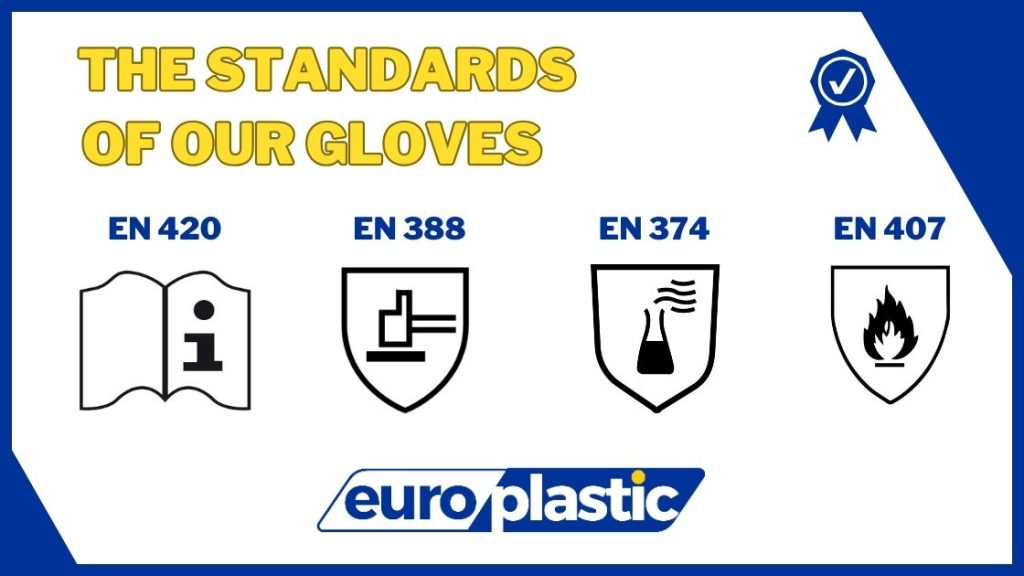
EN420 Protective gloves – general requirements for Gloves Includes Sizing defies general and valid requirements for all protective gloves.
EN388 Protection against mechanical risks (Abrasion/ Cut/ Tear/ Puncture Requirements) for safety gloves.
EN407 Glove giving protection from thermal hazards requirements for safety gloves against thermal hazards flammability radiant heat contact heat small molten metal splash convective heat large molten metal splash
EN374 Requirements for safety gloves against chemical hazards. Type A: Resistance to penetration of at least 6 types of chemical materials for at least 30 minutes. Type B: Resistance to penetration of at least 3 types of chemical materials for at least 30 minutes. Type C: Resistance to penetration of at least 1 type of chemical materials for at least 10 minutes.
EN511: Gloves giving protection from cold.
EN12477: Gloves protecting from manual metal welding.
EN10819: Anti vibration gloves.
EN 1082: Protection against cuts and knife nicks.
| Standard | Test | TypeA (MLR) | TypeB (MLR) |
|---|---|---|---|
| EN388 | Abrasion | 2 | 1 |
| EN388 | Cut | 1 | 1 |
| EN388 | Tear | 2 | 1 |
| EN388 | Puncture | 2 | 1 |
| EN407 | Burning behaviour | 3 | 2 |
| EN407 | Contact heat | 1 | 1 |
| EN407 | Convective heat | 2 | – |
| EN407 | Small splashes of molten metal | 3 | 2 |
| EN420 | Dexterity | 1 | 4 |
For more info do not hesitate to contact us 7/24. Our customer relation team will answer quickly!

No comment